Marketing launch
Turn a product announcement into a concise presenter video, then reuse the script for a landing-page clip, social cut, and internal briefing.
Build a launch video brief →These heygen ai examples show how teams turn a simple brief into presenter-led video, localized content, training material, and reusable sales assets without starting every project from scratch.
Try the workflow →The strongest AI video examples begin with a defined audience, a single viewing goal, and an output that can be reviewed quickly. Use this checklist before choosing an avatar, voice, or visual treatment.
| Requirement | Working standard | Proof of completion |
|---|---|---|
| Audience | One clear viewer group | The opening names a specific need |
| Message | One action or idea per scene | The script can be summarized in one sentence |
| Format | Consistent presenter, voice, and framing | Every scene feels part of one series |
| Reuse | Captions, transcript, and short cut-downs | The master video supports more than one channel |
Turn a product announcement into a concise presenter video, then reuse the script for a landing-page clip, social cut, and internal briefing.
Build a launch video brief →Explain a feature or process in a calm, repeatable format that customers can watch before opening a support ticket.
Plan customer education content →Give account teams a polished overview video that keeps product language aligned across regions, industries, and sales stages.
Create a sales video outline →Convert policy updates and onboarding notes into short modules with clear chapters, visible next steps, and consistent narration.
Shape a training module →Start with one approved master and adapt it for new languages while protecting the original pacing, terminology, and visual identity.
Prepare a localization workflow →A useful video is more than a talking head. It combines a purposeful opening, readable on-screen language, visual pacing, and a closing action that tells the viewer what to do next.
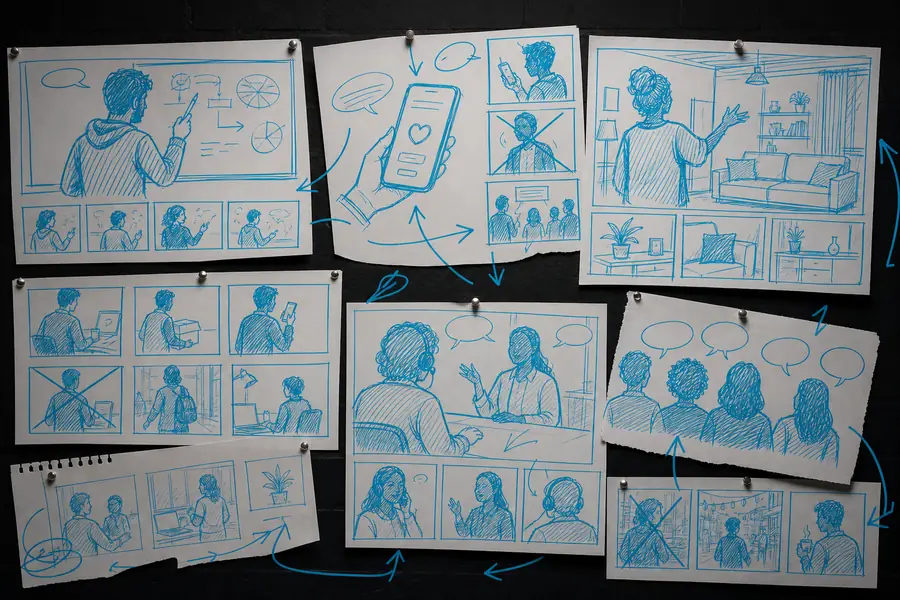
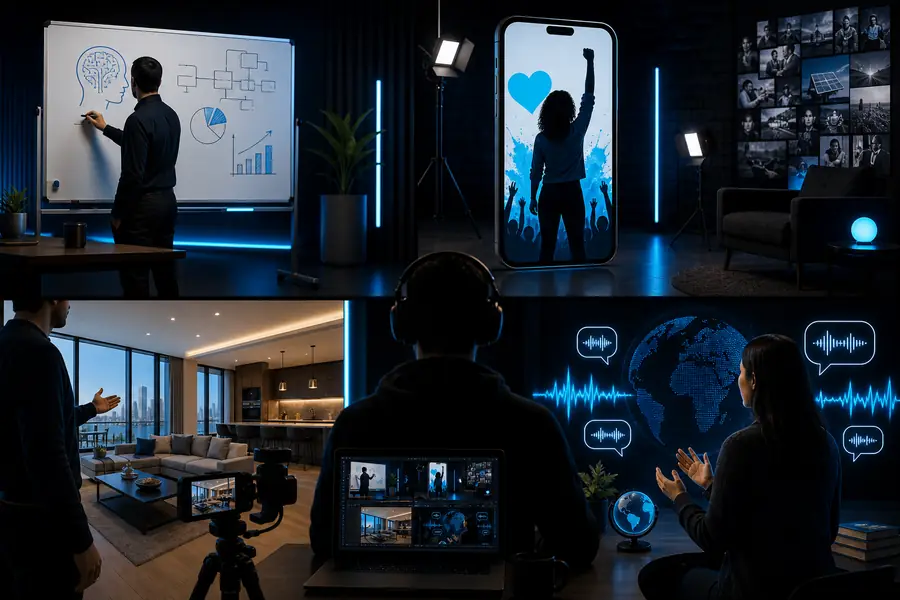
The difference is usually not a more elaborate effect. It is a sharper brief: one audience, one promise, and one visual cue supporting each spoken idea.
Use the estimate below to make the operational value visible. The numbers are planning guidance, not a promise of a fixed production schedule.
For a small series, quality means repeatability. Keep the same pronunciation choices, use a stable visual hierarchy, and review the first finished scene before generating every remaining scene. That approach catches awkward emphasis or crowded captions while changes are still inexpensive. In practical heygen ai examples, the best results often come from a disciplined template rather than from adding more animation.
Most revisions follow a familiar pattern. Understanding how the format evolved helps teams avoid treating a new video tool like a traditional edit suite.
Teams began with a written message and used AI presenters to test more concepts before committing to a full shoot.
Templates, saved voices, and standard scene structures made recurring education and enablement series easier to maintain.
One approved master can now support multiple language versions, but terminology review remains essential for credibility.
High-performing teams approve the brief, pronunciation, and first scene early instead of waiting until the entire sequence is rendered.
Can you provide some examples of HeyGen videos? Yes: the right choice depends on the audience, how often the message changes, and how much review the subject requires.
These scenarios are a starting point, not a substitute for editorial judgment. A useful brief makes the viewer benefit obvious in the first few seconds, keeps each scene narrow, and leaves enough room for captions on smaller screens. If a draft needs repeated explanation, the issue is usually upstream in the message design.
Turn an idea into a video example →